
Engraved Wedding Bands: History, Meaning & Modern Symbolism
Wedding bands have a rich history stretching back to the Ancient Egyptians. Over centuries, they have evolved immensely, eventually becoming the sleek, minimalist bands many of us recognise today.
While modern wedding rings are often associated with simple, unadorned designs, engraving has long played an important role in their history. Intricate inscriptions, symbols, initials, and poetry once transformed wedding bands into deeply personal keepsakes, adding layers of meaning and sentimentality. Passed down through generations, these rings often became treasured family heirlooms, making every engraved detail all the more significant.
Today, engraved wedding bands are experiencing a revival as couples seek meaningful ways to personalise their jewellery. To understand why these designs remain so enduringly romantic, it helps to look back at their fascinating history.
The History of Engraved Wedding Bands
Before precious metals became widely used, the Ancient Egyptians crafted rings from braided reeds, leather, or hemp. The circular shape symbolised eternity, while the open centre represented a gateway into the couple’s future together.
This symbolism carried into Ancient Rome, where iron rings became common before gold emerged as the preferred material towards the end of the Roman Empire. The Romans were among the first to engrave wedding rings with letters and symbolic motifs.
By the Middle Ages, wedding bands throughout Europe were commonly crafted from iron, silver, and gold, and inscriptions became increasingly elaborate. Posy rings were especially popular in England and France, engraved with romantic poetry and messages of devotion, often written in Latin or French. These inscriptions were usually hidden inside the band, known only to the couple, creating a beautiful sense of intimacy.
Wedding ring traditions also varied across cultures. In the Byzantine Empire, for example, rings were often engraved with figures of the couple themselves.
Between the 15th and 17th centuries, Gimmel rings became highly fashionable. These intricate rings consisted of interlocking bands worn separately by each partner during their engagement. During the wedding ceremony, the bands were joined together to form a complete ring, symbolising unity and commitment.
By the Victorian era, wedding bands became increasingly decorative, featuring engraved flowers, hearts, and intertwined initials. Yellow gold was particularly popular, often enhanced with gemstones, diamonds, or enamel detailing.
Following the Second World War, wedding band styles shifted towards simplicity. Smooth, unembellished bands became the norm, perhaps reflecting the austerity of the post-war period. This era also marked the rise of wedding rings for men, as soldiers wanted a lasting symbol of their marriage while away at war. However, by the 1960s and 70s, engraved and diamond-set bands had once again returned to popularity.
The Meaning Behind Engraved Wedding Bands
Throughout history, wedding rings have symbolised love, devotion, and eternal union. In the medieval period, however, they also represented contracts and promises, often given as a pledge of commitment or even financial security.
The tradition of wearing a wedding ring on the fourth finger of the left hand can be traced back to the Ancient Egyptians, who believed this finger contained the vena amoris, or the “vein of love”, thought to connect directly to the heart. The Romans later adopted this belief, and although it is not anatomically accurate, the tradition remains today.
The engravings themselves have also evolved over time. Roman rings often featured symbolic motifs such as clasped hands, representing loyalty and partnership. In medieval Europe, intimate inscriptions and love poems were hidden inside bands as private declarations of devotion.
During the Renaissance, romantic phrases such as mon cuer avez (“you have my heart”) and amor vincit omnia (“love conquers all”) became popular engravings. By the Victorian and Edwardian eras, engraved initials and monograms became especially fashionable, and this tradition continues in contemporary wedding jewellery today.
Modern Symbolism
The meaning behind engraved wedding bands continues to evolve with every generation. While historical engravings reflected the traditions and beliefs of their time, modern couples often use engraving to tell their own unique story.
Whether it is a meaningful date, a shared phrase, initials, or symbolic motifs, engraving transforms a wedding band into something deeply personal. These details give rings emotional significance beyond their beauty, making them cherished heirlooms that can be passed down through generations.
In a world increasingly drawn to individuality and craftsmanship, engraved wedding bands offer a timeless way to celebrate love with both history and personal meaning woven into every detail.
Shopping Engraved Wedding Bands
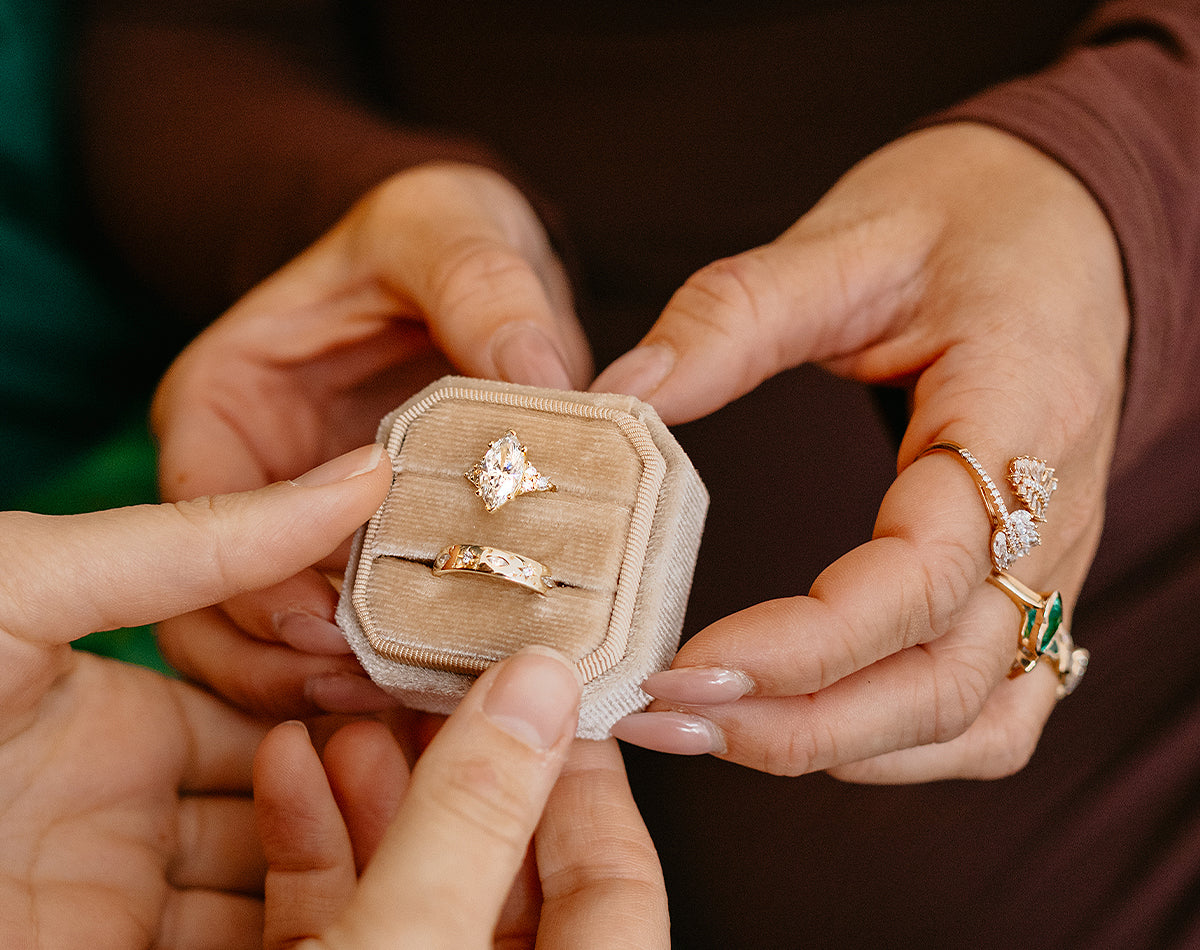
While antique wedding bands remain highly sought after, I understand they are not always the right fit for every couple. At Clarity Diamonds, engraved bands capture the romance and craftsmanship of historical designs while offering a refined, contemporary feel.
‘The Soph’ embodies the charm of Victorian-era jewellery, combining intricate engraving with flush-set marquise diamonds for what I see as an ethereal take on a vintage-inspired wedding band.
‘The Rose’ evokes the simplicity and romance of medieval jewellery. I love how its hand-engraved roses, long associated with love and beauty, create a timelessly feminine design filled with quiet sentiment.
For those drawn to elegant Edwardian-inspired styles, ‘The Evervine’ offers what I think is a delicate celebration of nature and romance. Hand-engraved vines weave around sparkling diamonds, symbolising eternal growth, connection, and enduring love.
Whether inspired by the poetry of Posy rings or the ornate craftsmanship of the Victorian era, I believe engraved wedding bands remain one of the most meaningful ways to celebrate a lifelong commitment.
Sources
- https://www.london-victorian-ring.com/blogs/journal/the-history-of-wedding-rings
- https://4cs.gia.edu/en-us/blog/origin-of-wedding-rings/#men
- https://claritydiamondsbyaimee.com/
- https://antiquejewellers.com/blogs/antique-vintage-rings/the-history-of-the-wedding-band?srsltid=AfmBOoqlV5Q3PQdyQgyTMTJ1CdPYAoZsrAaNCZH8cgxtNtCOBf6MfJhU
Share
